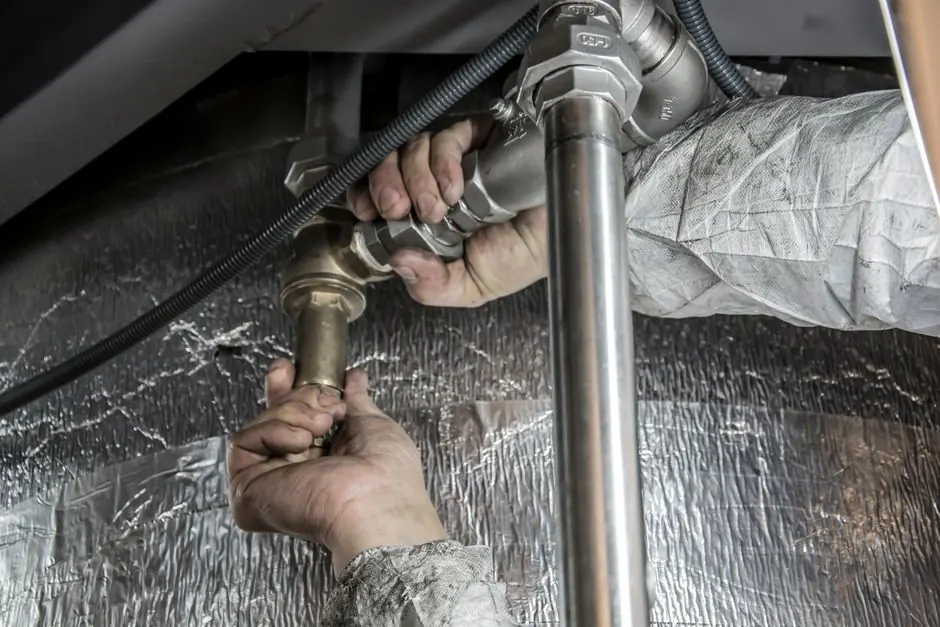
Tankless Water Heater Maintenance Guide
Tankless water heater maintenance means descaling the heat exchanger, cleaning the inlet water filter, checking the venting system, and testing the pressure relief valve — done once a year for most homes, or every 6 months if you have hard water. A tankless unit doesn't store water, but hard water still leaves mineral scale on the heat exchanger, and that scale is the #1 cause of efficiency loss and early failure.
The full guide below covers what to do, how often, the DIY descaling steps, and when the job belongs to a professional.
Why Tankless Heaters Need Maintenance Anyway
There's a persistent myth that tankless water heaters are maintenance-free because there's no tank to rust or sediment to flush. It's wrong — and expensive to believe.
A tankless unit heats water on demand as it flows through a compact heat exchanger with narrow passages. Hard water — rich in calcium and magnesium — deposits minerals on those passages every time the burner fires. Over months and years:
- Scale insulates the heat exchanger. The burner has to work harder to transfer heat through a mineral crust, so the unit runs hotter, longer, and less efficiently.
- Flow gets restricted. Scale narrows the water passages, causing temperature swings, reduced hot-water flow, and in bad cases, error-code shutdowns.
- The heat exchanger can overheat. Trapped heat from scale buildup stresses the metal, which can crack or fail — and the heat exchanger is the most expensive part of the unit.
Tankless units are built to last roughly 15 to 20 years, but that's with regular care. Neglected units often fail years earlier from scale damage. Regular maintenance also protects your warranty: many manufacturers require documented annual service to keep coverage valid.
Tankless Maintenance Schedule at a Glance
| Task | How often | DIY or pro? |
|---|---|---|
| Descale/flush the heat exchanger | Once a year (every 6 months with hard water) | DIY or pro |
| Clean the inlet water filter | Every 3–6 months | DIY |
| Inspect venting and air intake (gas units) | Once a year | DIY visual check; pro for anything beyond that |
| Test the pressure relief valve | Once a year | DIY |
| Check for leaks and corrosion | Every few months | DIY |
| Full professional inspection | Once a year | Pro |
How Water Hardness Changes Your Schedule
Water hardness is the single biggest factor in how often your tankless unit needs descaling. Hardness is measured in grains per gallon (GPG):
- Soft water (0–3 GPG): Annual descaling is plenty.
- Moderate water (4–7 GPG): Descale annually; clean the filter every 6 months.
- Hard water (8–10 GPG): Descale every 9–12 months; check filters every 3–4 months.
- Very hard water (11+ GPG): Descale every 6 months; check filters quarterly.
Homes across Gwinnett County, including Lawrenceville, commonly have moderately hard water — so if you don't know your number, plan on at least annual descaling and filter cleaning every 6 months. A simple hardness test strip from a hardware store costs a few dollars and takes the guesswork out. If you have hard water, a whole-house water softener or scale filter is worth discussing during a tankless water heater service visit — it's the best long-term protection for the heat exchanger.
How to Descale a Tankless Water Heater
Descaling (also called flushing) circulates a mild acid solution through the heat exchanger to dissolve mineral buildup. It takes about 45–60 minutes. You need a submersible pump, two hoses, a 5-gallon bucket, and white vinegar or a manufacturer-approved descaling solution. (Avoid harsh chemical cleaners — residues can contaminate drinking water.)
- Shut off power and gas. Turn off the breaker (electric) and the gas supply valve (gas). Close the hot and cold water isolation valves on the unit.
- Connect the hoses. Attach one hose to the cold-water service port and one to the hot-water service port. Place both hose ends in the bucket — one near the pump, one for return.
- Fill and circulate. Add 2–3 gallons of undiluted white vinegar (or the descaling solution per the label) to the bucket, submerge the pump, and circulate through the unit for 45–60 minutes. Follow your manufacturer's specific instructions for timing.
- Flush with clean water. Disconnect the pump and run clean water through the unit for 5–10 minutes to clear all remaining solution.
- Reconnect and restart. Close the service ports, reopen the isolation valves, restore power and gas, and run a hot tap to bleed air. Check for leaks at the ports.
Two cautions: follow the manufacturer's instructions exactly — some brands void the warranty if the wrong solution is used. And if the unit is throwing error codes, running hotter than usual, or has never been flushed in several years, heavy scale may already be causing damage — that's the point where a professional tank flush and sediment cleaning is the safer call than a first-time DIY flush.
Clean the Inlet Water Filter
Almost every tankless unit has a small inlet water filter (usually near the cold-water inlet) that catches sediment and debris before it reaches the heat exchanger. When it clogs, you get low water flow and temperature fluctuations — and many homeowners misdiagnose this as a failing unit.
- Every 3–6 months: close the cold-water valve, unscrew the filter housing, rinse the filter under running water, and reinstall it.
- Some gas units also have an air filter — clean that on the same schedule, since restricted combustion air causes its own set of problems.
This is a five-minute job, and it's the maintenance task owners skip most often. Put it on a seasonal reminder alongside your vent check.
Check the Venting and Air Intake (Gas Units)
A gas tankless heater's vent pipe carries exhaust gases out of the house, and its air intake feeds combustion. Once a year — ideally bundled with your filter clean — do a visual check: look for disconnected joints, rusted sections, bird nests or cobwebs at the termination, and any venting that's been bumped or crushed. Blocked or damaged venting creates carbon-monoxide risk and poor combustion. Anything beyond a visual check — vent sizing, combustion analysis — belongs in the annual professional visit.
Test the Pressure Relief Valve
Like tank heaters, tankless units have a temperature-and-pressure relief valve that guards against dangerous pressure buildup. Test it once a year: lift the lever briefly, then release it. You should hear a burst of water that stops completely when the lever drops. If nothing comes out, or it keeps dripping afterward, the valve needs replacing — treat it as a safety repair, not a cosmetic one.
Signs Your Tankless Heater Needs Service Now
Scale buildup doesn't happen overnight, so watch for the gradual symptoms — they usually mean a descale is overdue:
- Temperature swings during showers (hot, then cold, then hot again)
- Reduced hot-water flow or the unit taking longer to deliver hot water
- Error codes on the digital display related to ignition, overheating, or water flow
- Unusual noises — rumbling, popping, or vibration during operation
- Longer wait times for hot water at taps that used to be quick
If you're seeing several of these at once, the unit is working harder than it should. Read our tank vs tankless comparison if you're wondering whether the unit is aging out, but first try a proper descale — scale is the culprit far more often than the unit itself.
DIY vs Professional Tankless Maintenance
| DIY | Professional | |
|---|---|---|
| First-year tool cost | ~$80–115 (pump, hoses, bucket, descaler) | $0 |
| Ongoing cost | ~$20–30/year for descaler | ~$100–200 per flush; ~$150–300 for flush + full inspection |
| Best for | Handy owners comfortable with plumbing basics | Anyone with a gas unit, error codes, or warranty requirements |
| Warranty | Some brands require professional service records | Documented service protects coverage |
If you plan to stay in your home more than a year, DIY descaling pays for itself quickly. But hire a technician if your unit is under warranty with a professional-service requirement, if it's throwing error codes, or if you're simply not comfortable working around gas connections and 120°F+ water. There's no shame in that — a service call is far cheaper than a heat exchanger replacement.
When to Call a Professional
Annual professional maintenance covers what DIY can't: combustion analysis, gas-leak checks, sensor and electrical diagnostics, and a full performance test. If your tankless unit is showing temperature swings, throwing codes, or hasn't been serviced in over a year, Water Heater Pros offers tankless water heater services across Lawrenceville and Gwinnett County — flush, inspection, and repair in one visit. Call (770) 796-7565 to schedule.
For tank-style heaters, the routine is different — see our water heater maintenance guide for the tank version of this checklist.