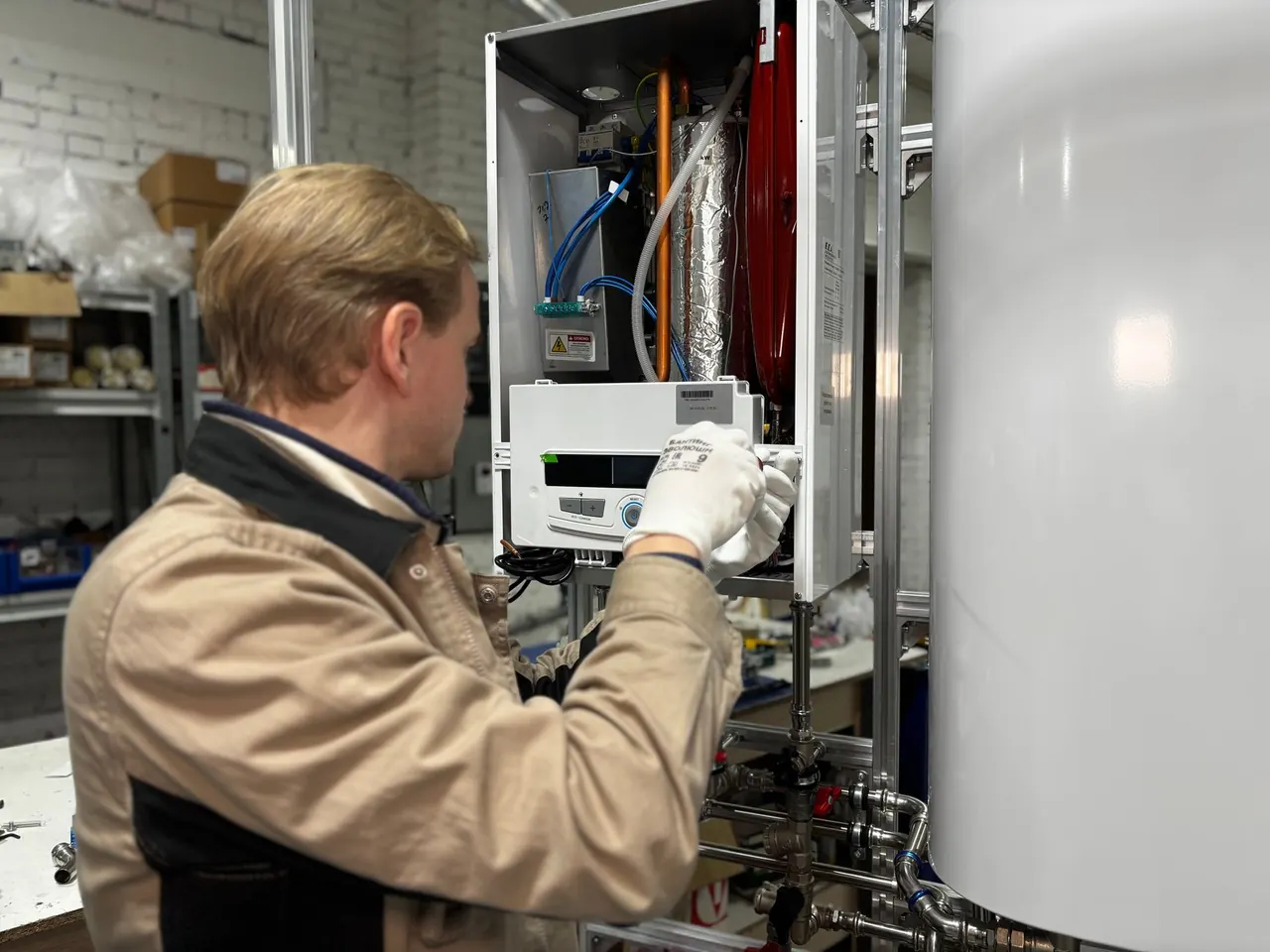
Water Heater Troubleshooting: Diagnose Common Problems
Most water heater problems trace back to a short list of causes — and you can usually identify yours in about fifteen minutes by matching what you see, hear, and smell to the symptom below. This guide walks you through the most common issues, the safe first checks you can try yourself, and the exact point where you should stop and call a professional.
Find Your Symptom in 30 Seconds
Match what your water heater is doing to the row below, then jump to the section for the full diagnosis.
| Symptom | Most Likely Cause | DIY or Pro? |
|---|---|---|
| No hot water at all | Tripped breaker, tripped reset button, pilot light out | DIY first checks; pro for gas/electrical parts |
| Runs out of hot water fast | Failed lower heating element, undersized or aging tank, sediment | Pro recommended |
| Water is scalding hot | Thermostat set too high or stuck thermostat | DIY: lower to 120°F; pro if it won't hold |
| Popping, rumbling, banging | Sediment baked onto the tank bottom | DIY flush; pro if noise persists |
| Water pooling around the heater | Loose fitting, leaking valve, or corroded tank | Pro — tank leaks are not repairable |
| Rusty or discolored hot water | Corroding tank or depleted anode rod | Pro recommended |
| Rotten-egg smell from hot tap | Bacteria reacting with the anode rod | DIY flush possible; pro for rod replacement |
| Low hot water pressure | Mineral buildup in pipes or fixture screens | DIY screen cleaning; pro for system-wide issue |
Safety Before You Touch Anything
Two rules cover almost every danger in water heater troubleshooting:
- Smell gas? Stop. Don't relight anything, don't flip switches, don't troubleshoot. Leave the house and call your gas utility or 911, then call a plumber. Gas problems are never DIY.
- Electricity and water don't mix. Before opening any access panel on an electric water heater, switch off the breaker — not just the thermostat. If the breaker keeps tripping when you reset it, that's an electrical fault (often a grounded heating element). Repeated resets can damage the wiring; this one goes to a professional.
Everything else below assumes those two checks are clear.
No Hot Water at All
Start with the free checks, in order:
Electric water heater: Check your breaker panel — a tripped breaker is the single most common cause of sudden no-hot-water calls. Reset it once. If it trips again, stop (see the safety note above). Next, press the red high-limit reset button behind the upper access panel. If you get hot water back, the thermostat likely overheated the tank once; if the reset keeps tripping, the thermostat or an element needs professional attention.
Gas water heater: Check that the gas valve is on, then look at the pilot light. A pilot that went out can usually be relit following the manufacturer's instructions. If the pilot won't stay lit, the thermocouple — the small safety sensor that tells the gas valve a flame is present — has usually failed. Thermocouple replacement is a standard, affordable repair.
Both types: Confirm the thermostat is actually calling for heat (set to around 120°F, the standard recommended setting). Sediment burying the burner or lower element can also choke off heating entirely, especially on units that haven't been flushed in years. Our water heater maintenance guide covers the flush that prevents this.
Not Enough Hot Water (It Runs Out Fast)
If the water starts hot and fades quickly, you're usually looking at one of three things. On electric units, the lower heating element does most of the work — when it fails, you get a tank that only half-heats. A failed lower element is a common repair but involves 240-volt wiring, so it belongs to a pro. Second, check the thermostat setting before assuming the worst: a thermostat knocked down to 110°F will feel like "not enough" in winter. Third, consider the tank itself. Sediment displaces water — a 50-gallon tank with several inches of sediment at the bottom may effectively hold far less hot water than it used to, and a tank past 10–12 years is losing capacity to internal corrosion. Our repair-or-replace guide helps you decide whether the fix is worth it on an aging unit.
Water Is Too Hot or Scalding
First, turn the thermostat down to 120°F and give the tank a few hours. If the temperature won't come down — or it swings wildly between lukewarm and scalding — the thermostat is stuck or failing. A stuck thermostat is more than an annoyance: it can overheat the tank and trip the high-limit safety switch (which is why "no hot water" and "too hot" sometimes turn out to be the same failed part). Thermostat replacement is a routine job; see our thermostat replacement service for what's involved.
Popping, Rumbling, or Banging Noises
Those sounds are almost always sediment. Minerals in the water settle on the tank bottom and bake into a crust; water trapped under the crust boils and pops as the burner fires. It's the water heater equivalent of a kettle with limescale — noisy, inefficient, and slowly damaging the tank. A flush usually quiets it: drain the tank until the water runs clear. If the noise persists after a thorough flush, the sediment has hardened and the tank may already be damaged — time for a professional assessment before it becomes a leak. A pro sediment flush can sometimes clear what a DIY drain can't.
Water Leaking From or Around the Heater
Location is everything with leaks. Water dripping from a fitting, the drain valve, or a supply-line connection is a standard repair — tighten or replace the part and move on. Water seeping from the tank body or a seam is a different verdict entirely: the steel has corroded through, and a tank cannot be patched. That's a replacement. One special case: the T&P relief valve (the brass valve with a discharge pipe running down the side of the tank) drips when pressure or temperature runs too high — sometimes a failing valve, sometimes a real overpressure problem that needs diagnosis, never something to cap or plug. We walk through every leak location in detail in Can a Leaking Water Heater Be Repaired?.
Rusty or Discolored Hot Water
Run the cold tap and the hot tap separately. If only the hot water is rusty, the corrosion is inside your tank or the anode rod is depleted — the rod is the sacrificial part that keeps the tank from rusting, and once it's gone, the tank is next. If both hot and cold run rusty, the problem is in your home's pipes or the municipal supply, not the heater. A depleted anode rod is a cheap fix (see our anode rod cost guide); a rusting tank at 10+ years is usually the beginning of the end.
Hot Water Smells Like Rotten Eggs
That sulfur smell comes from bacteria in the tank reacting with a magnesium anode rod — it only affects the hot water, which is the giveaway. A full flush with a hydrogen peroxide treatment often clears it, and switching to an aluminum-zinc or powered anode rod usually prevents it from coming back. (We're publishing a dedicated deep-dive on this exact problem soon — the short version is above, and the rod options are compared in our anode rod guide.)
Low Hot Water Pressure
If pressure is low at every hot tap but fine on cold, mineral buildup is narrowing the hot-water lines or clogging fixture screens — common in homes with hard water, which parts of Gwinnett County have. Start cheap: unscrew faucet aerators and showerheads and soak them in vinegar. If only one fixture is affected, the clog is local to that fixture. If the whole house has weak hot pressure, the buildup may be in the tank's outlet or the supply lines, and that's a plumber's job to diagnose without damaging old fittings.
Error Code on a Tankless Unit
Tankless heaters diagnose themselves — the display code tells you exactly which subsystem faulted. Write down the exact code and check the manufacturer's manual first; many codes point to simple causes like a dirty inlet filter, a blocked vent, or scale on the heat exchanger. Don't just reset and ignore a recurring code — repeated faults mean the underlying problem is still there, and running a scaled heat exchanger will destroy it. Our tankless water heater services page covers professional descaling and diagnostics.
When to Stop and Call a Professional
Some symptoms are the water heater telling you not to touch it:
- Gas odor anywhere near the unit — leave the house, call the gas company or 911 first.
- Breaker trips repeatedly — electrical fault; don't keep resetting it.
- Water leaking from the tank body — replacement territory, and standing water damages floors fast.
- Burning smell or visibly damaged wiring — don't open the panel; call a pro.
- Water dangerously hot with no response to the thermostat — scald and pressure risk.
For everything else on this page, Water Heater Pros can diagnose the problem in a single visit anywhere in Lawrenceville and Gwinnett County. Most repairs land in the $150–$700 range (see our repair cost guide), and if the unit isn't worth fixing we'll tell you that instead of selling you a repair — our what's actually fixable guide shows how we make that call.
Frequently Asked Questions
Why did my water heater suddenly stop producing hot water? The most common sudden causes are a tripped breaker or tripped reset button (electric), or a pilot light that went out (gas). Check those first — they take two minutes and fix a large share of "no hot water" calls.
How do I know if my water heater problem is serious? Leaks from the tank body, gas odors, repeated breaker trips, and scalding water that won't respond to the thermostat are the serious ones — stop and call a professional. Noises, smells, and temperature quirks are usually diagnosable and often fixable.
Can I troubleshoot a gas water heater myself? The safe DIY checks — gas valve position, pilot light status, thermostat setting — are fine for a homeowner. Anything involving gas connections, the gas control valve, or combustion parts belongs to a licensed professional, both for safety and to keep your warranty valid.
My water heater is making noise but still works. Should I worry? Yes, a little. Popping or rumbling means sediment is building up, and sediment shortens tank life by overheating the bottom of the tank. Flush it now while it's still just a noise — waiting turns it into a leak.
Is it worth calling a pro for a water heater that's over 10 years old? Often yes for a diagnosis, but be realistic about the outcome. Past 10–12 years, major repairs are usually money toward a replacement instead. A diagnostic visit still pays for itself by confirming whether you're looking at a $200 fix or a new unit.
Get a Real Diagnosis, Not a Guess
Troubleshooting narrows it down — a professional confirms it. If you've worked through the checks above and the problem is still there (or it's on the "stop and call" list), Water Heater Pros will diagnose it properly and give you straight options: repair or replace, with honest pricing either way. Call (770) 796-7565 for same-day service across Lawrenceville and Gwinnett County, or reach us through our contact page — and for after-hours emergencies, our emergency repair line is open around the clock.